Browsed by
Author: OMP-Admin

Sri Lanka Inflation Hits 70% in Economic Crisis

Sri Lanka Inflation Hits 70% in Economic Crisis

In September 2022, Sri Lanka’s Inflation surged to a shocking 70%. This reflects the severe Inflation Crisis Sri Lanka is facing. The country has been through tough economic times since it gained independence.

Sri Lanka is now seeking the International Monetary Fund (IMF)’s aid. Talks about a bailout are underway. This isn’t new. Since 1965, Sri Lanka has sought IMF’s help sixteen times. A strict set of reforms may follow this rescue, typical of IMF agreements. Find out more about Sri Lanka’s economic situation and IMF involvement here.

The country also relies on other financial support, including loans from the Asian Development Bank and World Bank. These add up to US$12.13 billion. Despite this, Sri Lanka has looked towards Foreign Direct Investment (FDI) and remittances from overseas. However, COVID-19 has greatly reduced these remittances, worsening the financial strain.

The Sri Lanka Economic Turmoil requires immediate, smart steps towards recovery. Thankfully, there’s a silver lining. Recent trends show a decrease in inflation. This hints at a possible stabilization. Learn more about the government’s actions against the inflation crisis.

Sri Lanka's Inflation Peaks at 70% Amidst Economic Turmoil

Understanding Sri Lanka’s Inflation Crisis

Sri Lanka is facing tough economic times, and the rise in inflation is a big concern. This hike is vividly shown by the jump in the National Consumer Price Index (NCPI). This index measures how much prices have gone up.

Breaking Down the National Consumer Price Index Surge

Last May, prices went up by 45.3% compared to the year before, as shown by the NCPI. This major increase comes from higher prices for many consumer goods. It makes the cost of living in Sri Lanka more expensive, leading to tough economic challenges.

Food Inflation and Energy Costs’ Impact on Inflation Rates

Food inflation alone rose to 58% from the previous year. This happened as energy prices shot up. Higher energy costs also mean more expensive transportation and production. All these elements together push the inflation rate higher in Sri Lanka.
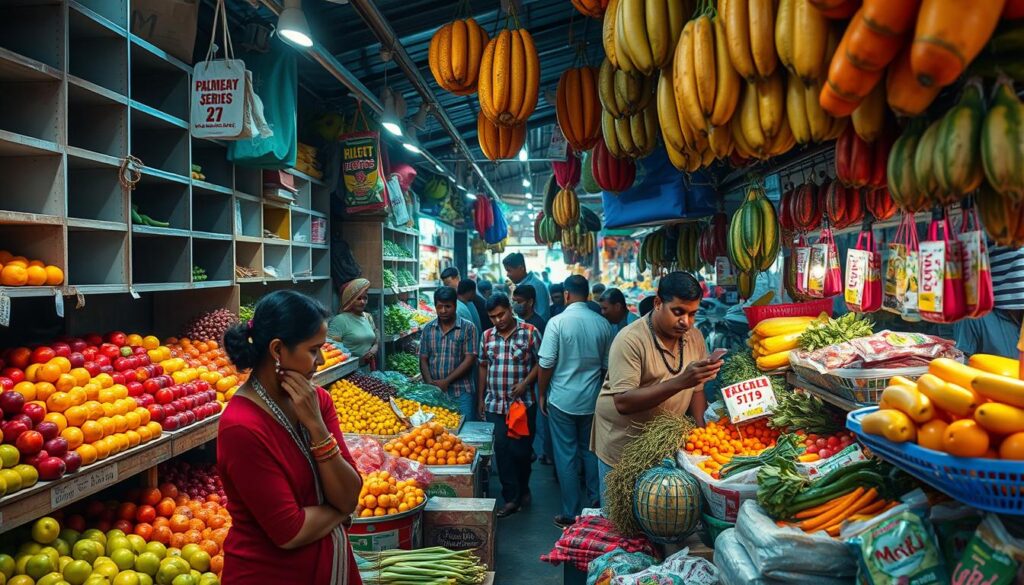
Rising Prices Sri Lanka

To fix the economy, Sri Lanka is trying various reforms. The Central Bank has tweaked its policies to meet these challenges. The country is also looking for help through global partnerships. This includes a key deal with the International Monetary Fund (IMF). The aim is to control inflation and get financial help during these hard times.

New measures are being set up to deal with inflation’s impacts. One priority is to change cash transfer programs. These changes are meant to help those hit hardest by the rising costs.

Year Annual Inflation Rate Main Contributing Factors
2022 70% Post-pandemic economic disruption, high energy costs
Mid-2023 12% Regulatory measures, international aid

As Sri Lanka works towards economic recovery, monitoring inflation is crucial. The government and analysts are focused on reducing the negative impacts. Their goal is to create a stable economic future for the country.

Sri Lanka’s Economic Turmoil and the Role of International Aid

Sri Lanka faces tough times with a huge 70% inflation rate. This situation causes much economic uncertainty. Fortunately, the country is seeking help from international partners. This assistance is crucial for them now, just like it was for other countries in the past.

Learning from nations like Germany and Zimbabwe, unchecked inflation can hurt economies badly. It lowers living standards and shakes confidence in the market. So, international help is very important for Sri Lanka. It will help stop economic decline and bring back stability.

The IMF’s extended fund facility gave crucial support during this economic crisis. This deal, worth $2.9 billion, marks Sri Lanka’s 17th time getting help from the IMF. It aims to fix the country’s debt issues and improve economic health.

Reforming monetary policy is a key part of the plan. It will handle inflation and help keep the economy stable. This approach is vital for Sri Lanka’s future growth and economic stability.

International aid for Sri Lanka isn’t just from the IMF. The World Bank and the Asian Development Bank also plan to help. They intend to provide around $4 billion more. This global support is a ray of hope for the country.

These funds aim to stop the inflation and support recovery. They back up programs improving education and helping children. These efforts are already making a difference during these hard times. With high inflation, such reforms are necessary.

Projects like the Climate Resilience initiative are also key. They focus on improving agriculture and building stronger infrastructures. These steps are essential for Sri Lanka’s economic recovery and growth.

Vesak Celebrations Illuminate Sri Lanka Amid Economic Challenges in 2022

Vesak Celebrations Illuminate Sri Lanka Amid Economic Challenges in 2022

Sri Lankans have shown incredible strength by reviving the Vesak festival during a severe economic crisis. This Buddhist celebration has brought hope and unity to people across the country. It has united Sri Lankans from all backgrounds.

Vesak Celebrations Illuminate Sri Lanka Amid Economic Challenges in 2022

The number of dansals and pandals increased during Vesak 2022, despite economic hardships. This revival of traditions shows the nation’s determination to overcome challenges. It marks the beginning of Sri Lanka’s journey towards recovery.

President Ranil Wickremesinghe attended 23 Vesak programs in Colombo. The Buddha Rashmi Vesak Zone was a highlight of the festivities. It was organized by the Hunupitiya Gangarama Temple with help from government agencies.

The Maha Karuna Buddhist Association of Singapore also played a role. This collaboration showcased the unity and resilience of Sri Lankans. It demonstrated their ability to come together during difficult times.

Vesak serves as a beacon of hope for Sri Lanka. It reminds people of their shared heritage and the power of unity. The increased participation in Vesak events from May 23 to 26 is inspiring.

It shows the unwavering spirit of Sri Lankans. Their determination to overcome current challenges is clear. The festival has become a symbol of national resilience and hope.

Revived Vesak Festival Brings Hope and Unity

The revived Vesak festival shines as a beacon of hope in Sri Lanka. It unites people from all walks of life during economic challenges. This Theravada Buddhism celebration showcases the nation’s resilience and solidarity.

Vesak marks the Buddha’s birth, enlightenment, and passing. It holds deep spiritual meaning for most Sri Lankans. This year, it symbolizes the nation’s drive to overcome the socio-economic crisis.

Increased Dansals and Pandals Symbolize Recovery

More dansals and pandals have appeared across the country this Vesak. Dansals are free food stalls set up by communities to help those in need. Pandals are temporary structures with lights honoring Buddha’s teachings.

These traditional elements show the nation’s gradual recovery. They also reflect people’s unwavering faith during tough times.

Sri Lankans Show Resilience and Solidarity

Vesak highlights the remarkable strength of Sri Lankan people. They celebrate this sacred occasion with devotion despite economic challenges. The festival allows people to find comfort in shared traditions.

The full moon’s soft glow reminds us of Sri Lanka’s enduring spirit. Through Vesak, people show their unity and compassion. They pursue a brighter future for their country.

The Importance of Inner Serenity During Challenging Times

Sri Lanka’s 2022 Vesak celebrations brought hope amid economic hardships. People united to find inner peace and harmony. Sri Lankans showed resilience by cultivating mindfulness and embracing interconnectedness.

Dansals and Pandals increased, showing the nation’s recovery. Eastern Orthodoxy and Buddhist traditions both value stillness practices. Sri Lanka’s organic farming shift aimed for sustainability, like cultivating inner peace.

Finding Stillness Amidst Chaos

Nature shows synergy and interdependence in biological relationships. Sri Lankans can achieve harmony by embracing unity in diversity. Political leaders promote unity after tragedies.

Youth participate in peaceful demonstrations for a better system. Their actions show solidarity and desire for change.

Embracing Unity in Diversity

The private sector fosters inclusivity through “difficult conversations” respecting diverse identities. FAO and Norway’s fisheries collaboration shows cooperation’s importance. Recognizing community strengths helps uplift the nation socio-economically and culturally.

Overcoming Collective Human Conditioning

Inner stillness requires stepping out of collective conditioning. Mindfulness helps individuals react without bias. Spiritual practices can guide actions for societal betterment.

Sri Lanka faces economic challenges while reimagining Colombo as a global city. True progress lies in the harmony and well-being of all citizens.

Elephants Rampage at Festival: 13 Injured in Stampede

Elephants Rampage at Festival: 13 Injured in Stampede

At a Hindu festival in Kataragama, Sri Lanka, joy turned to chaos. An elephant, startled during the festivities, ran through the crowd. This caused other elephants to join in, leading to a dangerous situation.

In Sri Lanka, 13 people were hurt and needed hospital care. Thankfully, they have all recovered. Elephants are a big part of religious events in Sri Lanka. But this incident raises concerns about their role and the safety of people.

elephants go on rampage & stampede injuring 13 at religious festival

Key Takeaways

  • An elephant stampede at the Kataragama festival led to injuries and safety worries.
  • This event shows the dangers of elephants in crowded places.
  • The injured people have all been looked after and are now out of the hospital.
  • It’s time to think about how we include animals in our traditions, considering both ethics and safety.
  • People organizing festivals, those who care about animals, and officials must work together. This will help avoid accidents in the future.

Chaos and Fear: How the Celebration Turned Catastrophic

The peaceful Ruhunu Kataragama Perahera festival in Sri Lanka suddenly changed. An elephant in the procession got aggressive. This led to 13 people getting hurt in Kataragama, about 175 miles from Colombo. Emergency teams came fast to help, and many injured were taken to hospitals.

Looking closely at these events shows how hard it is to manage big animals at festivals. Incidents not just in Sri Lanka but around the world call for better animal control. Even the best plans can fail when an elephant suddenly acts out, as seen in Colombo and Kandy.

The issues raise big worries about the safety of animals and people at these festivals. It’s essential to have good emergency plans ready. After this event, there’s been a lot of talk about changing how we handle animals at such events to keep everyone safe.

It’s tricky when tradition and safety intersect. We need smart, kind ways to manage animals and crowds. By learning from incidents around the world, we can handle high-risk situations better. This keeps our traditions alive safely.

Elephants Go on Rampage & Stampede Injuring 13 at Religious Festival

A sacred festival in Sri Lanka turned chaotic, injuring 13 people. This happened at the Ruhunu Kataragama Perahera, around 8:30 pm. Elephants and people panicked, showing we need better safety and animal care measures at these events.

Initial Panic: The Beginning of the Rampede

The trouble began 175 miles south of Colombo, in Kataragama. An elephant strayed, causing panic among people and other elephants. This led to a dangerous stampede. It shows the importance of strict crowd control and public safety at big gatherings.

Emergency Response: Controlling the Mayhem

Emergency teams quickly came to help those hurt and control the chaos. They worked hard to calm the elephants and help the injured. This highlighted the need for careful planning when animals are part of cultural events.

Aftermath: Injuries Treated and Discharged

Those hurt were rushed to Kataragama hospital for treatment. Thankfully, they all left the hospital okay. This raises talks about safety and managing events with animals, especially with the Sri Lankan elephant’s endangered status.

HNB Procurement Earns ISO 9001:2015 Certification

HNB Procurement Earns ISO 9001:2015 Certification

HNB Procurement Function Earns Prestigious ISO 9001:2015 Certification

Hatton National Bank PLC (HNB) continues to stand out as a top financial institution in Sri Lanka. It has recently achieved the ISO 9001:2015 certification for its Procurement Function. This shows the bank’s constant push for excellence in all its operations. Bureau Veritas acknowledged this certification, covering HNB Procurement processes like IT, Stationery, and General Procurement. These processes are within its Banking Services Department. This sets a global benchmark for quality management.

As a leader among Sri Lanka’s private banks, HNB has 254 customer centers. Its chase for the 2015 certification is backed by a history of excellence. Winning ‘The Best Bank – Sri Lanka’ at the Emerging Asia Banking Conclave and Awards and being named Best Retail Bank by the Asian Banker Awards show its commitment to top service. The ISO 9001:2015 certification adds to HNB’s collection of ISO recognitions. These include Inward Remittance, Outward Remittance, Centralized Operations, Centralized Credit Operations, and Credit Administration Departments.

The HNB ISO Certification boosts operational efficiency and improves supplier relations. It also lowers procurement errors. This award came after a detailed audit that checked most of HNB’s procurement activities. The bank noted big improvements in procurement, including more efficiency and fewer mistakes. These gains came from specialized training for the Procurement staff. These improvements after getting the ISO certification highlight HNB’s ongoing commitment to doing better and keeping stakeholders happy.

HNB Procurement Function Earns Prestigious ISO 9001:2015 Certification

The HNB Procurement Function now has the ISO 9001:2015 certification. This marks a big improvement in how it operates. It not only shows that HNB leads in banking innovation, but also its strong commitment to top service and client happiness. The 2015 certified procurement practices place it among the best in Sri Lanka’s banking world.

Significance of ISO 9001:2015 Certification for HNB Procurement

The ISO 9001:2015 award highlights the HNB Procurement Function’s aim for global quality standards. Achieving this level proves HNB’s quality management system is strong, making its procurement practices more reliable and efficient. This achievement also builds more trust with suppliers and partners, leading to better and more innovative procurement.

Rigorous Process of Achieving the ISO 9001:2015

Gaining the ISO 9001:2015 certification required a detailed review of HNB’s buying processes. This close examination made sure all operations met the highest quality standards. The procurement team had to show excellence in areas like IT, stationery, and general buying to meet the strict ISO criteria.

Department Certification Year Scope
HNB Procurement Function 2024 IT Procurement, Stationery Procurement, General Procurement
Centralized Operations 2024 Centralized Operations for banking services
Credit Administration 2024 Administering Credit Operations
Inward and Outward Remittance 2024 Handling of internal and external remittances

Earning the HNB Procurement ISO 9001 certification is a big achievement for the bank. It’s seen as a sign of trust and efficiency by partners and clients. HNB is dedicated to keeping its high standards in the tough world of finance.

Comprehensive Quality Management Frameworks at HNB

Hatton National Bank (HNB) has boosted its service quality. It got the ISO 9001:2015 certification for various procurement and operational areas. This award by Bureau Veritas shows HNB’s strong focus on top-notch quality management in financial services.

This honor covers important areas like IT, Stationery, and General Procurement. It shows the bank’s efficiency and its ability to meet global standards. These standards aim to make customers happier and improve how things run.

HNB’s quest for top quality doesn’t stop with procurement. Other key areas also achieved the 2015 certification. This includes divisions like Inward and Outward Remittance and Centralized Credit Operations. It marks a full embrace of quality-first strategies.

HNB operates a vast network of 254 customer centers. It’s one of Sri Lanka’s big private banks and focuses on tech innovation. The bank has won titles like Best Retail Bank and Best Bank in Sri Lanka at major awards.

The ISO 9001:2015 certification of HNB’s procurement is part of a broader quality focus. This approach is essential for growth in a shaky economy. It also helps build a strong brand that meets market and consumer needs.

Expanding Excellence: HNB’s Commitment to Service Quality

HNB is dedicated to outstanding customer service and improving customer experiences. It earned the 2015 certification in HNB Procurement. This shows HNB’s deep commitment to quality management in the finance sector.

By following the HNB Procurement ISO Certification standards, HNB proves its commitment. It aims to exceed customer expectations through quality service.

Impact of ISO 9001:2015 on Customer Experience

The ISO 9001:2015 isn’t just for show; it’s how HNB assures top-notch customer service. Thanks to the 2015 certification, customers can rely on HNB’s services. It shows HNB is proactive about quality and has systematic processes in place.

These achievements highlight HNB’s longstanding reputation for excellence. This includes being named ‘Sri Lanka’s Best Bank’ by Euromoney Magazine.

Supporting Strategic Goals Through Improved Operations

HNB’s certification under ISO 9001:2015 aligns with its strategic goals. It aims to be the leader and most trusted bank in Sri Lanka. The AA- rating from Fitch Ratings (Lanka) Ltd and awards, like ‘Best Managed Bank in Sri Lanka,’ show HNB’s commitment to excellence.

The efficiencies from the HNB Procurement ISO Certification support HNB’s aim for continual excellence.

Expanding Excellence: HNB’s Commitment to Service Quality

What does HNB Procurement Function’s ISO 9001:2015 certification signify?

The ISO 9001:2015 certification shows HNB Procurement Function meets high global standards. It proves HNB’s dedication to quality, customer happiness, and ongoing improvement. They work hard to make sure their purchasing processes are top-notch.

Who provided the ISO 9001:2015 certification to HNB’s Procurement Function?

Bureau Veritas, a world leader in testing, inspection, and certification, gave HNB the ISO 9001:2015 certification.

Which areas of HNB Procurement Function have been certified under the ISO 9001:2015?

The certification covers several areas like IT, Stationery, and General Procurement at HNB.

How does the ISO 9001:2015 certification impact the customer experience at HNB?

This certification means HNB works more efficiently and uniformly, leading to a better customer experience. It assures customers that HNB values quality and aims for constant improvement.

What role did HNB management play in achieving the ISO 9001:2015 certification?

Indrajith Senadhira and Roshan Fernando, HNB’s managers, played key roles in getting the ISO 9001:2015 certification. They showed HNB’s commitment to quality and consistent customer service.

Can you explain the process HNB underwent to achieve the ISO 9001:2015 certification?

HNB went through strict evaluation and documentation to ensure they matched ISO 9001:2015 standards. This involved meeting international quality management benchmarks and being audited by Bureau Veritas.

Are any other departments within HNB ISO 9001:2015 certified?

Yes, other departments at HNB also have the ISO 9001:2015 certification. This shows a broad commitment to quality throughout HNB.

What benefits does the ISO 9001:2015 certification provide to HNB?

The ISO certification brings HNB many advantages, like better operations, happier customers, strong supply chain management, and compliance with quality standards. These benefits help HNB keep its strong reputation in the finance industry.

Significance of ISO 9001:2015 Certification for HNB Procurement

The ISO 9001:2015 certification is vital for HNB Procurement. It globally acknowledges the bank’s procurement processes. This gives HNB a competitive advantage and highlights its dedication to excellence and customer satisfaction.

Rigorous Process of Achieving the ISO 9001:2015

Getting the ISO 9001:2015 certificate required a detailed evaluation. HNB assessed its processes and documentation, stuck to the standards, and proved its commitment to ongoing improvement.

Impact of ISO 9001:2015 on Customer Experience

The ISO 9001:2015 improves customer experience by focusing on quality and reliability. It leads to more customer satisfaction and trust in HNB.

Supporting Strategic Goals Through Improved Operations

The certification helps HNB reach its strategic goals. It ensures operations are optimized, reduces errors, and encourages a culture of excellence. This helps HNB grow and succeed.

Sri Lanka Christians Wave Black Flags to Protest Bombing Probe

Sri Lanka Christians Wave Black Flags to Protest Bombing Probe

With black flags, Sri Lanka Christians protest bombing probe

Christians in Sri Lanka chose a silent way to protest. They raised black flags at churches and homes. This action showed their frustration with the slow investigation into the Easter bombings. These bombings killed 269 people. Cardinal Malcolm Ranjith led this protest. He suggests that the real planners behind the attack might still be free.

At St. Sebastian’s Church in Negombo, the pain is deep. Many here lost loved ones. Manilal Ranasinghe criticizes the government for ignoring warnings. During the demonstration, Muslims also showed support by displaying black flags. This unity shows Sri Lanka’s strength in fighting terror.

Key Takeaways

  • Sri Lanka’s Christians show dissent through nationwide black flag protest.
  • Questioning of the integrity and thoroughness of the government’s bombing probe.
  • Cardinal Malcolm Ranjith has voiced suspicion over the arrests relating to the bombings.
  • Communities across religious lines in Sri Lanka showcase solidarity amidst tragedy.
  • Increased security measures enforced in response to the threat of terrorism.

Overview of the Easter Sunday Bombings and Subsequent Protests

On Easter Sunday, April 21, 2019, Sri Lanka faced chaos. This was because of suicide bombings by ISIS-inspired groups. National Thowheeth Jama’ath and Jammiyathul Millathu Ibrahim were behind it. They attacked Christian churches and luxury hotels in Colombo. This violence killed 270 people, including worshippers and foreigners, and hurt over 500.

This was the deadliest violence in Sri Lanka since 2009. The peace of a sacred holiday was destroyed for many. It reminded people of past conflicts.

Sectarian tensions grew after the bombings against the Muslim community. These people, making up 10% of the population, faced violence and boycotts. Despite warnings, the government’s response was slow due to issues and inefficiencies. This led to more trouble.

The Christian communities in Sri Lanka protested in response. They mourned their losses by waving black flags and demanded justice. These actions showed their pain and the need for better security.

The Sri Lankan Supreme Court pointed out serious governmental mistakes. These included inaction by the then-President Maithripala Sirisena despite prior warnings. This criticism has sparked widespread demand for improved security and accountability.

Aspect Details
Incident Date Easter Sunday, April 21, 2019
Locations Affected Christian churches and luxury hotels in Colombo, Sri Lanka
Casualties 270 dead, over 500 injured
Perpetrators Local Islamist extremist groups inspired by ISIS
Public Response Protests, waving of black flags by Christians
Government and Legal Response Judicial reprimand, call for security reforms

For more on Sri Lanka’s socio-economic stability, visit Sri Lanka’s economic crisis and recovery

With black flags, Sri Lanka Christians protest bombing probe

After the Easter Sunday attacks in 2019, Sri Lanka’s Christians are demanding justice. They’ve raised black flags as a symbol of their protest. This act comes as twenty-five people were recently charged for the bombings. These developments question the government’s investigation efforts.

About 7% of Sri Lanka’s population is Christian, mainly in areas like Negombo. This community was hard hit by the attacks, which claimed 269 lives. The attacks targeted them heavily, showing the risk they face in a country of diverse religions.

Sri Lanka’s Religious Demographics and Christian Minority

Christianity in Sri Lanka is mostly made up of Roman Catholics. This community, though small, was greatly affected by attacks on churches and hotels. It was the first major terror event since the Civil War ended in 2009. Such violence showed the religious group’s vulnerability among Buddhists, Hindus, and Muslims.

Accusations of Government Inaction and Political Conspiracy Allegations

The attack’s impact was profound, revealing political conspiracies. It highlighted a lack of cooperation between key leaders at the time. This resulted in missed warnings from foreign intelligence.

In Negombo, Christians gathered silently at St. Sebastian’s Church, waving black flags. They’re calling for action and measures to prevent future violence. Their protest shows they want those in power to take responsibility seriously.

Solidarity Across Communities in the Face of Tragedy

Despite being a minority, Christians saw support from other faiths after the bombings. Muslims and Christians united, raising black flags in grief. This act was a stand against the extremism that caused the tragedy.

Community bells rang at 8:45 a.m., marking the moment the tragedy began. This gesture called for peace and showed the community’s resilience. It’s a plea for respect and understanding among different faiths, aiming for a peaceful coexistence.